Why Have U.S. Recessions Become So Rare, and Is This the New Normal?
Since the Great Recession ended in June 2009, the United States has experienced only one official recession. That downturn, caused by the pandemic, lasted just…

Since the Great Recession ended in June 2009, the United States has experienced only one official recession. That downturn, caused by the pandemic, lasted just…
The Magnificent Seven—Alphabet, Amazon, Apple, Meta, Microsoft, Nvidia, and Tesla—have dominated U.S. market returns in recent years. Their success caused many investors to question why they should own smaller companies, international stocks, and other areas that had lagged. The first half of 2026 offered a clear answer. Through June 30, the Magnificent 7 stocks returned just 0.1%.…
Details
The debate over real estate vs. stocks has been going on for decades. A May 2025 Gallup survey found that 37% of Americans believe real estate is the best long-term investment — more than double the percentage who chose stocks.¹ Given that most Americans’ direct experience with real estate is residential — through homeownership or…
Details
With ongoing concerns around inflation, interest rates, and geopolitical events, gold and silver have attracted renewed investor attention over the past several years. But before adding precious metals to a portfolio, it is important to understand how these assets work, the risks involved, and how they compare to more traditional investments. In early 2020, gold…
Details
Concerns about the U.S. dollar usually fall into two categories. One reflects normal currency cycles. The other reflects fear of a true currency crisis. They are different concerns, but they can be understood—and addressed—within the same long-term framework. If You’re Concerned About a Weaker Dollar Periods of dollar weakness are common. Currencies move based on…
Details
U.S. stocks rose 17.15% in 2025, marking another solid year—but this time, it was international and emerging markets that led the way. Developed markets returned 31.85%, and emerging markets surged 33.57%, significantly outpacing the U.S. for the first time in years. Meanwhile, after a challenging stretch, falling interest rates across much of the yield curve…
Details
When you hire a financial advisor, you’re trusting them to help you make informed decisions that shape your long-term financial future. But how can you be confident that your advisor has the knowledge and experience to do it well? Resumes can look impressive. Websites can sound convincing. Even referrals can be misleading. So how can…
Details
If you only looked at where markets ended in June, it might appear to have been a relatively non-eventful quarter. Stocks finished higher, bonds posted modest gains, and balanced portfolios delivered healthy returns. But as is often the case, the journey was far more eventful than the destination. In early April, markets were rattled by…
Details
When it comes to building long-term wealth, a solid, evidence-based investment strategy is one of the best ways to put the odds of long-term investment success on your side. Layering tax-efficiency on top of this solid foundation, can further improve your after-tax results. After all, it’s not what you earn, it’s what you keep. At…
Details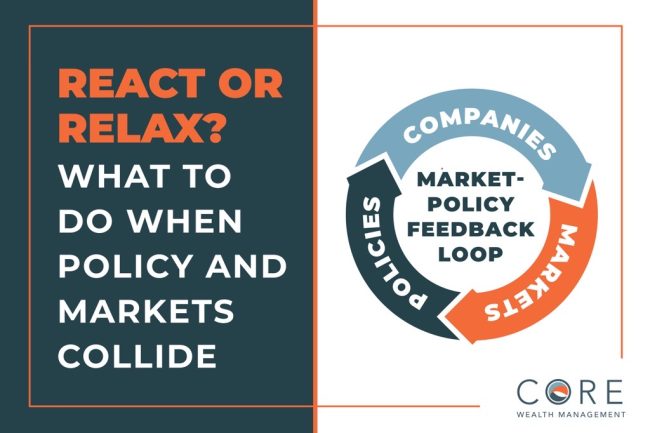
About fifteen years ago, as markets began recovering from the Great Recession, someone remarked, “The market wouldn’t have recovered if the government hadn’t stepped in with those bailouts.” We saw this dynamic again five years ago with the response to COVID-19. For a brief moment, it seemed like we were headed for a depression—but policymakers…
Details
If we were to simply post first quarter numbers, the picture would suggest a fairly typical quarter: U.S. stocks down modestly, international stocks up, and bonds doing their job. Global asset class returns through March 31, 2025, are summarized in the chart below: But that snapshot already feels outdated. Much of what investors are reacting…
Details